The government has launched a public consultation regarding its vape tax proposal, asking for comments. Although the New Nicotine Alliance (NNA) has described the tax policy (and the consultation document) as "puerile, naive and incredibly shallow," the nicotine consumer advocacy group strongly urges vapers and users of other nicotine products to register their opposition to the tax proposal by making a comment. The consultation is open until May 29.
British finance minister Jeremy Hunt announced today that the UK will impose taxes on vaping products for the first time, beginning in two years. The tax, which the government says will reduce youth vaping, will likely lead to fewer smokers switching to vapes, and push some current vapers back to smoking.
Although the tax will be subject to a public consultation, the government’s spring budget document lays out the current plan in detail, according to The Mirror. The budget says the tax will be £1 per 10 milliliters of zero-nicotine e-liquid, £2/10 mL for e-liquids containing from 0.1-10.9 mg/mL of nicotine, and £3/10 mL on products containing e-liquid in 11 mg/mL or greater strengths.
Currently, vapes are subject to a 20 percent value added tax (VAT—a sales tax), like most consumer products. The new tax will be in addition to the 20 percent VAT.
So a consumer who currently pays £5 for a 10 mL bottle (the maximum legal size) of e-liquid in 18 mg/mL nicotine strength would be charged an additional £3 tax plus the £1 VAT, for a total cost of £9 (about $11.45 U.S.)—a total tax rate of 44 percent.
NNA: UK is “systematically dismantling world-leading policy”
The plan was cheered by tobacco control groups, and by British American Tobacco, whose cigarettes and Vuse vapes are losing market share to disposable vapes. BAT CEO Tadeu Marroco told the Financial Times that his company “loves regulation.”
The New Nicotine Alliance (NNA)—which advocates for nicotine consumers—said in a statement that it is “exasperated that the government is systematically dismantling world-leading policy which was an example to the rest of the world on how to utilise innovative harm reduction approaches to rapidly reduce the toll of smoking-related disease.”
News that the government planned to tax vapes leaked in January. A tax had been among the potential actions included in a public consultation that launched after the government announced plans in October to propose a “smokefree generation” law.
Vape taxes and restrictions
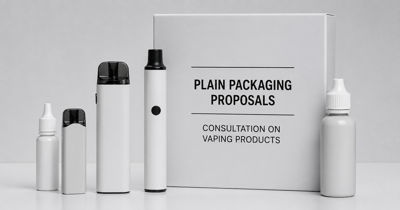
In late January, Prime Minister Rishi Sunak said the government intends to ban disposable vapes, restrict available vape flavors, impose “plain packaging” rules, limit how vapes are displayed in stores, and move forward on its generational tobacco ban. Sunak also said that nicotine-free vapes would, for the first time, fall under the same regulations as vapes that contain nicotine.
Nearly fifty countries have some kind of vape tax. Most have a per-milliliter e-liquid tex—like the proposed UK tax—or base the tax on the wholesale cost of products. There is no federal tax in the United States, but 31 states, Washington, D.C., and Puerto Rico, impose their own taxes.
Research shows that vaping product taxes increase cigarette sales and smoking. Vapes and cigarettes are economic substitutes, which means government actions that disadvantage one (like taxes and flavor bans) increase sales and use of the other—including among teenagers.


Learn whether caffeine pouches are safe, including potential side effects, caffeine limits, oral health risks, and who should avoid them.

Because of declining cigarette sales, state governments in the U.S. and countries around the world are looking to vapor products as a new source of tax revenue.

A list of vaping product flavor bans and online sales bans in the United States, and sales and possession bans in other countries.

A closer look at PouchPoint, an online nicotine pouch store offering competitive pricing, wide selection, and a smooth shopping experience.