As vaping grows in popularity, it becomes a natural target for governments in need of tax revenue. Because vapor products are usually bought by smokers and ex-smokers, tax authorities correctly assume that money spent on e-cigarettes is money not being spent on traditional tobacco products. Governments have depended upon cigarettes and other tobacco products as an income source for decades.
Whether vaping devices and e-liquid deserve to be taxed like tobacco is almost beside the point. Governments see them pushing smokers away from tobacco, and they understand that the lost revenue must be made up. Since vaping looks like smoking, and there is substantial public health opposition to vaping, it becomes an attractive target for politicians, especially because they can justify the tax with a variety of questionable health claims.
Vape taxes are now being proposed and passed regularly in the United States and elsewhere. Taxes are usually opposed by advocates for tobacco harm reduction, representatives of vaping industry trade groups, and vaping consumers, and they’re supported by tobacco control organizations, doctors, and the lung, heart and cancer associations.
Why do governments tax vaping products?
Taxes on specific products—usually called excise taxes—are applied for various reasons: to raise money for the taxing authority, to change the behavior of those being taxed, and to offset environmental, medical, and infrastructure costs created by the use of products. Examples include taxing alcohol to dissuade excessive drinking, and taxing gasoline to pay for road maintenance.
Tobacco products have long been a target for excise taxes. Because the harms of smoking impose costs on the whole society (medical care for smokers), proponents of tobacco taxes say that tobacco consumers should foot the bill. Sometimes excise taxes on alcohol or tobacco are called sin taxes, because they also punish the behavior of drinkers and smokers—and in theory help convince the sinners to quit their wicked ways.
But because the government becomes dependent on the tax revenue, a decline in the smoking rate creates a financial shortfall that must be made up with some other source of income, or else the government must reduce spending. For most governments, the cigarette tax is a significant revenue source, and the excise is charged in addition to the standard sales tax assessed on most consumer products.
How do vape taxes work?
Most U.S. consumers pay a state (and sometimes also local) sales tax on the vaping products they purchase, so governments already benefit from vape sales even before excise taxes are added. Sales taxes are usually assessed as a percentage of the retail price of the products being purchased. In many other countries, consumers pay a “value added tax” (VAT) that works the same way as a sales tax. As for excise taxes, they come in a couple of basic varieties.
One of the most common forms of vape tax is assessed at retail. Some taxes cover all vaping products (like New York State’s 20% tax), and others target e-liquid only. Sometimes the tax is only charged on sales of nicotine-containing e-liquid.
Wholesale taxes are ostensibly charged to the wholesaler (usually a distributor) selling products to a business that will resell them at retail sites in the state. The tax is usually a percentage of the wholesale price (cost). It may be assessed on all vaping products or just nicotine-containing ones. Although wholesale taxes are not collected from the end user of the product, the cost of the tax is usually factored into the retail price of the product.
Vaping taxes in the United States
There is no federal tax on vaping products in the U.S. Bills have been introduced in Congress to tax vapes, but none has so far gained enough support to pass.
Vape taxes in U.S. states, territories and municipalities
Before 2019, nine states and the District of Columbia taxed vaping products. That number more than doubled in the first seven months of 2019, when the moral panic over JUUL and teenage vaping pushed legislators to do something to "stop the epidemic."
As of early 2024, 31 U.S. states have a tax on vapor products, along with some cities and counties, and the District of Columbia and Puerto Rico.
Alabama
A tax of $0.10 per milliliter on all e-liquid. The tax applies to products with and without nicotine.
Alaska
Alaska doesn’t have a state tax, but some municipalities have their own vape taxes:
- Juneau Borough, NW Arctic Borough and Petersburg Borough have identical 45% wholesale taxes on nicotine-containing products
- Anchorage Borough has a 55% wholesale tax
- Matanuska-Susitna Borough has a 55% wholesale tax
California
The California wholesale tax on “other tobacco products” is set yearly by the state Board of Equalization. It mirrors the percentage of all taxes assessed on cigarettes. Originally this amounted to 27% of the wholesale cost, but after Proposition 56 increased the tax on cigarettes from $0.87 to $2.87 a pack, the vape tax increased drastically. For the year beginning July 1, 2025, the tax is 54.27% of the wholesale cost for all nicotine-containing products.
On July 1, 2022, California added a retail tax to the existing wholesale tax—12.5% on all nicotine-containing vaping products, including those bought online from retailers in other states.
Colorado
The current tax in Colorado is 56% of manufacturer’s list price on all nicotine-containing vapor products (including bottled e-liquids). The tax will increase to 62% July 1, 2027. The tax is 50% lower for products given a Modified Risk (MRTP) designation by the FDA (but no manufacturer of a liquid-based vaping product has applied for an MRTP authorization).
Connecticut
The state has a two-tiered tax on nicotine-containing vape products: $0.40 per milliliter on e-liquid in closed-system products (pods, cartridges, disposables), and 10% wholesale on open-system products, including bottled e-liquids and devices.
Delaware
A tax of $0.05 per milliliter on nicotine-containing e-liquid.
District of Columbia
The nation’s capital classifies vapes as “other tobacco products,” and assesses a tax on the wholesale price based on a rate that is indexed to the wholesale price of cigarettes. The tax is currently set at 79% of wholesale cost for devices and nicotine-containing e-liquids.
Georgia
A tax of $0.05 per milliliter on e-liquid in closed-system refills (pods, cartridges), and a 7% wholesale tax on open-system devices, bottled e-liquids, and disposables that can't be refilled or reused. The taxes apply to products with and without nicotine.
Hawaii
A 70% wholesale tax on all vaping products.
Illinois
A 45% wholesale tax on nicotine-containing vaping products. In addition to the statewide tax, both Cook County and the city of Chicago (which is in Cook County) have their own vape taxes:
- Chicago assesses a $1.50 per unit tax on any vaping product containing nicotine (bottled e-liquids or prefilled devices) and a separate $1.20 per milliliter tax on the liquid itself. (Chicago vapers also must pay the $0.20 per mL Cook County tax)
- Cook County taxes products containing nicotine at a rate of $0.20 per milliliter
Indiana
A 15% tax on the retail gross on all vaping product sales, with or without nicotine; and a 15% wholesale tax on closed-system products like prefilled pod vapes (and refill pods and cartridges) and disposables.
Iowa
Beginning Jan. 1, 2027, a tax of $0.05 per milliliter on nicotine-containing e-liquid.
Kansas
A tax of $0.05 per milliliter on all e-liquid. The tax applies to products with and without nicotine.
Kentucky
A 15% wholesale tax on bottled e-liquids and open-system devices, and a $1.50 per unit tax on prefilled pods and cartridges. The taxes apply to products with and without nicotine.
Louisiana
A tax of $0.15 per milliliter on nicotine-containing e-liquid.
Maine
A 75% wholesale tax on all vaping products. The tax applies to products with and without nicotine.
Maryland
A 20% retail tax on open-system vaping products and bottled e-liquids, and a 60% tax on nicotine-containing e-liquid in containers with a capacity under 5 milliliters (pods, cartridges, disposables). In addition to the state tax:
- Montgomery County imposes a 30% wholesale tax on all vaping products, including devices sold without liquid
Massachusetts
A 75% wholesale tax on all vaping products. The tax applies to products with and without nicotine. The law requires consumers to produce proof that their vaping products have been taxed, or they are subject to seizure and a fine of $5,000 for the first offense, and $25,000 for additional offenses.
Minnesota
In 2011 Minnesota became the first state to impose a tax on e-cigarettes. The tax was originally 70% of wholesale cost, but was increased in 2013 to 95% of wholesale on finished products that contain nicotine (cigalikes, pod vapes, bottled e-liquids) and are transported from out of state. However, for bottled e-liquids produced in Minnesota, only the nicotine itself is taxed.
Nebraska
Nebraska has a two-tiered tax, depending on the size of the e-liquid container (or prefilled vape). For products containing less than 3 milliliters of e-liquid, the tax is $0.05/mL. For products containing 3 mL or more, there is a 10% wholesale tax. The tax applies only to products that contain nicotine. In addition to the state tax:
- Omaha includes vaping products in the city’s 3% tobacco tax
Nevada
A 30% wholesale tax on all vapor products. The tax applies to products with and without nicotine.
New Hampshire
An 8% wholesale tax on open-system vaping products (including nicotine-containing e-liquids), and $0.30 per milliliter on closed-system products (pods, cartridges, disposables).
New Jersey
New Jersey taxes nicotine-containing e-liquid at $0.30 per milliliter in pod- and cartridge-based products, 30% of the retail price for bottled e-liquids, and 30% wholesale for devices.
New Mexico
New Mexico has a two-tiered e-liquid tax: 12.5% wholesale on bottled e-liquids, and $0.50 on each pod, cartridge, or cigalike with a capacity under 5 milliliters. The taxes apply to products with and without nicotine.
New York
A 20% retail tax on all vapor products. The tax applies to products with and without nicotine.
North Carolina
A tax of $0.05 per milliliter on nicotine-containing e-liquid.
Ohio
A tax of $0.10 per milliliter on nicotine-containing e-liquid.
Oregon
A 65% wholesale tax on all non-cannabis "inhalant delivery systems,", including hardware and "components" (which includes bottled e-liquids). The tax also includes heated tobacco products (HTPs) like IQOS, but exempts all vaping products sold in licensed cannabis dispensaries. The tax applies to products with and without nicotine.
Pennsylvania
A 40% wholesale tax on e-liquids and devices that are sold with e-liquid included. The tax applies to products with and without nicotine.
Puerto Rico
A tax of $0.05 per milliliter on e-liquid, and a $3.00 per unit tax on e-cigarettes.
Rhode Island
A 10% wholesale tax on open-system vape products and bottled e-liquids, and a $0.50 per milliliter tax on sealed devices sold with liquid included.
Tennessee
A 10% wholesale tax on all vapor products.
Utah
A 56% wholesale tax on bottled e-liquids and prefilled devices. The tax applies to products with and without nicotine.
Vermont
A 92% wholesale tax on bottled e-liquids and devices. The tax applies to products with and without nicotine.
Virginia
A tax of $0.11 per milliliter on nicotine-containing e-liquid.
Washington State
Beginning Jan. 1, 2026, Washington has adopted a new tax system for all nicotine products except cigarettes. The state assesses a 95% tax, which is generally based on wholesale prices, although in some cases it may be 95% of the retail price. The state's original two-tiered vaping products tax—$0.27 per milliliter on e-juice in pods and cartridges smaller than 5 mL in size, and $0.09 per milliliter on liquid in containers larger than 5 mL—will apparently continue to be charged on zero-nicotine products.
West Virginia
A tax of $0.075 per milliliter on all e-liquid. The tax applies to products with and without nicotine.
Wisconsin
A tax of $0.05 per milliliter on e-liquid in closed-system products (pods, cartridges, disposables) only. The tax applies to products with and without nicotine.
Wyoming
A 15% wholesale tax on all vaping devices and nicotine-containing e-liquids.
Vape taxes around the world
As in the United States, legislators around the world don’t really understand vapor products. The new products seem to lawmakers like a threat to cigarette tax revenue (which they truly are), so their impulse is often to impose high taxes and hope for the best.
International vape taxes
Albania
A tax of 10 leke per milliliter on nicotine-containing e-liquid.
Austria
A tax of €0.20 per milliliter on all e-liquid.
Azerbaijan
A tax of 20 manats per liter on all e-liquid.
Bahrain
The tax is 100% of the pre-tax price on nicotine-containing e-liquid. That supposedly equates to 50% of the retail price. The purpose of the tax is unclear, since vapes are supposedly banned in the country.
Belarus
A tax of 0.77 Belarusian rubles (BYN) per milliliter on e-liquid, and BYN2.72 on each vaping device, according to Google AI, which cites ECigIntelligence as its source. News sources report in October 2025 that Belarus intends to increase the vape tax by "up to 20%" in 2026.
Belgium
A tax of €0.15 per milliliter on all e-liquid.
Bulgaria
A tax of 0.35 Bulgarian Leva per milliliter on nicotine-containing e-liquid.
Canada
A federal tax of 1.12 Canadian dollars per 2 milliliters (or fraction thereof) on the first 10 mL in any bottle, pod, or cartridge, then $1.12 per additional 10 mL (or fraction thereof). The tax applies to all vaping products that contain e-liquid, with or without nicotine. Most Canadian provinces also have vape taxes of their own.
China (People's Republic of China)
China has a two-pronged wholesale tax, assessing a 36% rate on the production or import of e-cigarettes, and a separate 11% tax on wholesale domestic distribution.
Costa Rica
A 20% wholesale tax on all vaping products and accessories.
Croatia
Although Croatia has an e-liquid tax on the books, it is currently set at zero.
Cyprus
A tax of €0.12 per milliliter on all e-liquid.
Czech Republic (Czechia)
Czechia began taxing vape products in 2024 at a rate of 2.50 Czech koruna (CZK) per milliliter. The plan is to increase it gradually to CZK10/mL by 2027, according to Chemnovatic.
Denmark
A tax of 2 Danish krone (DKK) per milliliter on all e-liquid.
Ecuador
A 150% wholesale tax on "other tobacco products," which includes vaping products.
Estonia
A tax of €0.20 per milliliter on all e-liquid.
Finland
A tax of €0.30 per milliliter on all e-liquid.
Georgia
A tax of 0.2 Georgian Lari per milliliter on all e-liquid.
Germany
A tax of €0.32 per milliliter on all e-liquid.
Greece
A tax of €0.10 per milliliter on all e-liquid.
Hungary
A tax of 20 Hungarian forints per milliliter on all e-liquid.
Indonesia
A 10% tax on all vaping products.
Ireland
A tax of €0.50 per milliliter on all e-liquid.
Israel
On March 3, 2024, the Israeli Tax Authority increased the e-liquid tax to “not less than” 10.04 New Israeli Shekels (NIS) per milliliter (equivalent to $2.76 US per mL—nearly $83 for a 30 mL bottle). The authority also announced that the tax will increase in July to not less than NIS18.60/mL. The tax applies to e-liquid with or without nicotine, and includes e-liquid contained in bottles, pods, and disposable vapes.
Italy
A tax of €0.146966 per milliliter for nicotine-containing e-liquid, and €0.101039/mL for zero-nicotine products.
Jordan
Taxes on vaping products were reduced in December 2025. The current rates are 1.5 Jordanian Dinars (JOD) per milliliter on e-liquid in prefilled, sealed devices and refill pods; JOD0.5 on bottled e-liquid; and JOD10 per device sold without e-liquid.
Kenya
The current excise rates are 40% for devices, and 70 Kenyan shillings per milliliter on e-liquid.
Latvia
Latvia currently applies a dual tax to products containing e-liquid: €0.01 per milliliter of liquid + €0.005 per milligram of nicotine, according to Chemnovatic.
Lithuania
A tax of €0.25 per milliliter on all e-liquid.
Malaysia
A 10% tax on vaping devices and a 40 sen per milliliter tax on e-liquid. However, the government announced Oct. 29, 2021 that it would begin taxing nicotine-containing liquid, which will require a change in the law that prohibits sales of nicotine-containing products except by pharmacies. (In early 2022, this tax was postponed).
Montenegro
A tax of €0.90 per milliliter on all e-liquid.
North Macedonia
A tax of 3 Macedonian Denar (MKD) per milliliter on all e-liquid, according to Tobacco-Free Kids.
Norway
A tax of 4.5 Norwegian Krone (NOK) per milliliter on all e-liquid.
Paraguay
The law classifies e-cigarettes as tobacco products, and taxes them at 16% (probably based on wholesale price). However, most sellers don't register the products as tobacco, but import them under other classifications.
Philippines
As of 2025, the country imposes a tax of 54.60 Philippine pesos (PHP) per milliliter for nicotine salt-based e-liquids, and PHP63 per 10 mL of freebase nicotine e-liquids, according to the Philippines Department of Finance. The tax is scheduled to increase by 5% each year.
Poland
A tax of 0.96 Polish Zloty (PLN) per milliliter on all e-liquids (which will increase to PLN1.44/mL in 2026 and to PLN1.80/mL in 2027); and a separate tax of PLN40 on all vaping devices.
Portugal
A tax of €0.336 per milliliter on nicotine-containing e-liquid.
Romania
A tax of 0.52 Romania Leu (RON) per milliliter on nicotine-containing e-liquid. The tax can be adjusted annually based on consumer price increases.
Russia
A tax of 44 rubles (RUB) per milliliter on all e-liquid. The rate is scheduled to increase to RUB49 in 2027 and RUB51 in 2028.
Saudi Arabia
The tax is 100% of the pre-tax price on e-liquid and devices. That supposedly equates to 50% of the retail price.
Serbia
A tax of 4.32 Serbian dinar (RSD) per milliliter on all e-liquid.
Slovakia
A tax of €0.20 per milliliter on e-liquid. In February 2027, according to Chemnovatic, the tax will increase to €0.30/mL.
Slovenia
A tax of €0.18 per milliliter on nicotine-containing e-liquid.
South Africa
A tax of 3.18 South African rand (ZAR) per milliliter on all e-liquid.
South Korea (Republic of Korea)
The first country to impose a national vape tax was the Republic of Korea (usually called South Korea in the West)—in 2011, the same year Minnesota began taxing e-liquid. Currently the country has four separate taxes on e-liquid, each earmarked for a specific spending purpose (the National Health Promotion Fund is one). The various South Korean e-liquid taxes add up to a whopping 1,799 South Korean won (KRW) per milliliter, and there is also a waste tax on cartridges and pods of KRW24.2 per 20 units.
Spain
A tax of €0.15 per milliliter on e-liquid with nicotine strengths from 0-15 mg/mL, and a €0.20/mL tax on liquids from 16-20 mg/mL.
Sweden
A tax of 2 Swedish krona (SEK) per milliliter on nicotine-containing e-liquid up to 15 mg/mL. E-liquid containing 15-20 mg/mL is taxed at SEK4/mL.
Togo
Taxed up to 45% (believed to be based on the wholesale price).
Ukraine
A tax of 3 Ukrainian hryvnia (UAH) per milliliter on all e-liquid.
United Arab Emirates (UAE)
The tax is 100% of the pre-tax price on e-liquid and devices. That supposedly equates to 50% of the retail price.
Sources
Vaping360 appreciates any updates or corrections to the posted tax rates. Please comment below, and provide supporting information (newspaper articles, links to government websites, etc.) if it's available.

China destroyed more than 55,000 vapes and 188 million smuggled cigarettes as a wider crackdown seized $355 million in illicit tobacco.

Eight EU governments want a ban on new nicotine products, broad flavor restrictions, and tighter rules for vapes and nicotine pouches.
UK expands age-18 rules to nicotine-free vapes and nicotine pouches on Oct. 29, banning vending machines, promotional giveaways, and major discounts.

UK smoking falls to a record-low 9.8% in 2025, while 5.4 million adults vape in Great Britain, according to new government statistics.
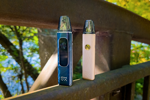
Check out our OXVA XLIM 4 and XLIM PRO 4 review to learn about the new UNITECH 3.0 pods and the incredibly innovative anti-burn tech (ABT).
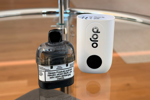
The DOJO BLAST X combines a 10 mL refill system, a dual-mesh coil, and a 1000 mAh battery. Is it needlessly confusing? Read our review to find out.
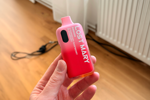
The Lost Mary BM6000 is a pre-filled pod vape that pairs a 2 mL pod with a 10 mL refill container and a QUAQ mesh coil. Read our review to learn more.
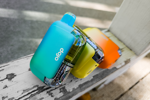
The DOJO PUREX 60K is a disposable vape with a 1000 mAh battery, 16 mL INSTA-JUICED tank, and two power modes. Read our review to learn more.