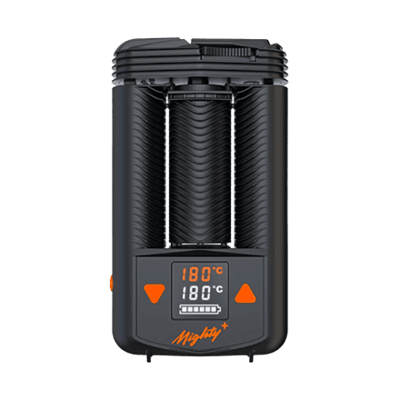
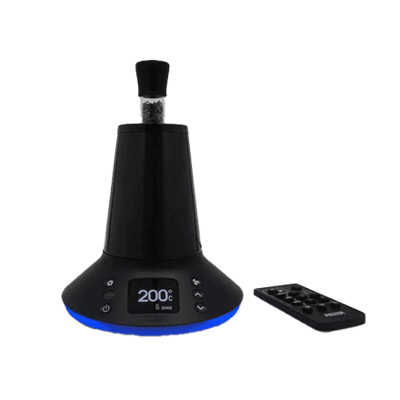
Storz & Bickel Mighty+
Reliable and sturdy, the Mighty+ lets you vaporize dry herbs and waxy concentrates on the go without sacrificing vapor quality. It heats in 60 seconds, and users can dial in temps on a simple digital display. A ceramic-coated chamber holds up to 0.25 grams and helps boost the flavors in your herb.
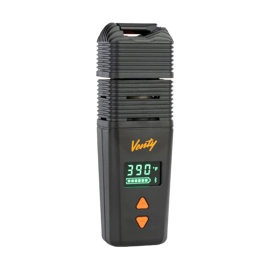


What is a portable vaporizer?
Weed vaporizer technology has come a long way over the past few years. Stationary desktop vaporizers were once the norm, but portable vaporizers and dry herb pens have made dry herb vaping on the go possible.
To start, vaporizers are devices that use heat to create vapor from dry cannabis bud. Some vaporizers are designed to handle waxy concentrates as well. There’s one element that all of these devices have in common: no vaporizer uses combustion, but heating methods vary. Dry herb vaporizers are a healthier alternative to smoking flower.
Portable vaporizers make it simple to vape dry herb on the go. They’re handheld devices that can be carried around in a pocket or bag, though they tend to have more heft than a standard weed pen.
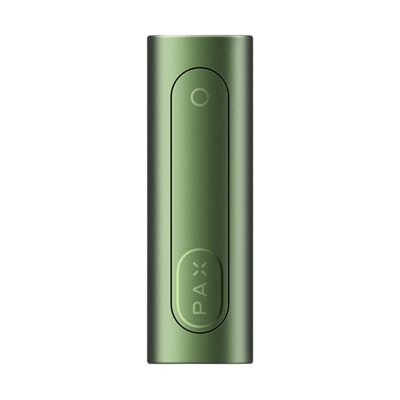
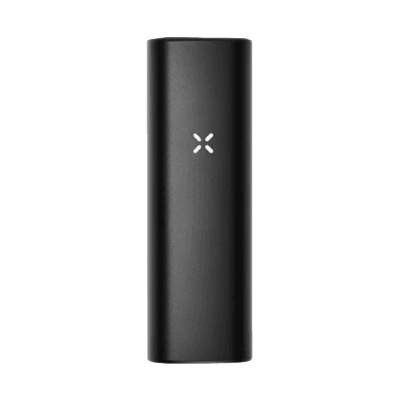
Parts of a portable vaporizer
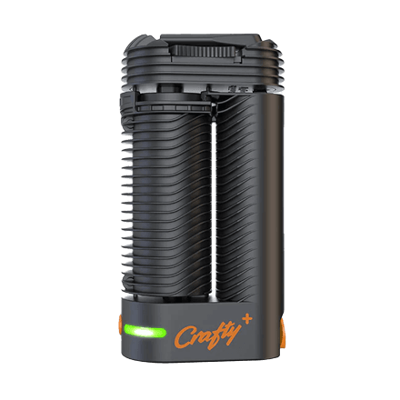
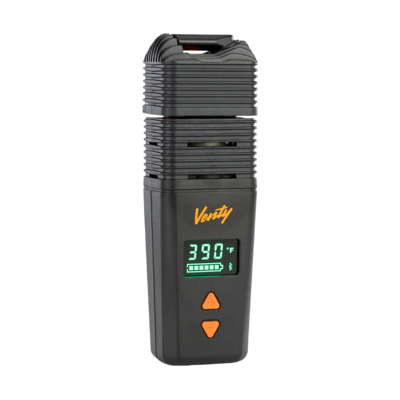
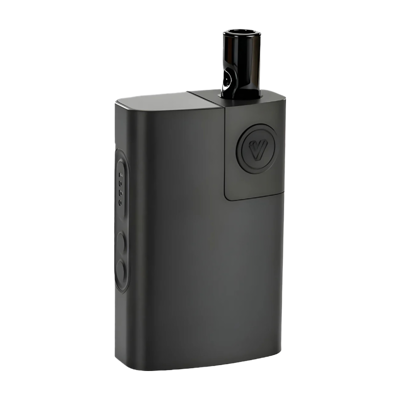
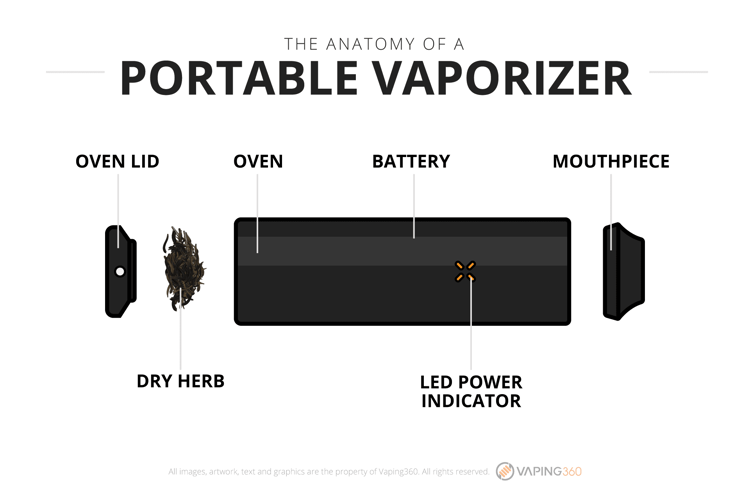
Pocket vaporizers are constructed from a few key parts: the chamber, a heating element, a battery, and a mouthpiece.
The chamber is where you pack your ground herb before powering up. The heating element (usually metallic or ceramic) is activated by the battery and heats your weed in order to create vapor. When you fire up your portable vaporizer, your weed will be heated using convection or conduction (or a combination of the two.)
Unlike many tabletop vaporizers, portable models don’t need to be plugged into a wall outlet or USB port as you vape. These are battery-operated devices that can be recharged and used freely, whether or not they’re connected to a power source. Most use either 18350 or 18650 batteries.
The materials used to make a mouthpiece vary. Glass mouthpieces are the best bet if you want to maximize flavor, though these are the most prone to breaking. Look for a silicone or metal mouthpiece if you’re an active person.
Different types of portable vaporizers
You can choose between three varieties of portable vaporizer, depending on which heating method you prefer. Just keep in mind that some types are more common than others and the cost will vary.
Portable conduction vaporizers
Conduction is the most common heating method used by portable vaporizers. Through conduction, it’s easy to keep the device compact and portable.
Think of a conduction vaporizer like a stovetop or frying pan. To cook the weed, your bud needs to come into direct contact with a heated surface.
The inside of a conduction vaporizer’s chamber is made of ceramic or stainless steel. When you fire up the device, the heating element warms the steel or ceramic at high temperatures. This heat is transferred through the chamber’s surface, cooking whatever bud it comes into contact with.
You’ll need to stir a conduction vaporizer throughout your vaping session. Because the dry herb needs to come into direct contact with the chamber, you run the risk of uneven heat distribution.
Pick up a conduction vaporizer if vapor production is your priority. They’re preferable if you enjoy strong hits and a quick high. Conduction portable vaporizers also require less battery power to operate.
Portable convection vaporizers
In a portable convection vaporizer, dry herb doesn’t come into direct contact with the heating element. These devices used to have more bulk, since they require an additional component to cook your bud, but they have become more compact recently.
Portable convection vaporizers are less common than conduction models. The price tag is often higher, as well.
Rather than a stovetop, convection vaporizers work like an oven. Hot air is introduced into the chamber to cook dry herb and create vapor. Depending on the device, it will use either an internal fan or just heat the air from your draw.
Compared to conduction vaporizers, convection devices tend to produce more flavor detail.
And one of the top benefits of convection vaporizers? They’re more convenient to use. You don’t need to stir your herb to ensure an even distribution of heat. Instead, the heated air is blown throughout your device’s entire chamber.
Portable hybrid vaporizers
There’s some confusion over the word “hybrid,” at least in the context of vaporizers. A hybrid device isn’t one that cooks waxy concentrates and weed oils, on top of dry herb. Hybrid refers to the heating method that’s used—or, in this case, the combination of methods.
Hybrid portable vaporizers use a mixture of conduction and convection. This is more common in expensive, high-end devices. If you see a dirt cheap vaporizer labeled as "hybrid." chances are they are being "creative" with the spec sheet.
Desktop vaporizers vs. portable vaporizers
To decide between desktop and portable vaporizers, consider your lifestyle and vaping habits. Neither is superior in all cases—it’s all personal preference.
- Desktop vaporizers for added controls: Generally, desktop vaporizers give the user more room to personalize their experience. Features like precise temperature control are more common in desktop models, while portable vaporizers often rely on presets.
- Portable vaporizers for flexible, on-the-go vaping: If carrying around your vaporizer is essential, then you’ll need to buy a portable device. Not only are these devices lightweight, but they also don’t need an external power source to work. As long as your pocket vaporizer is charged and you have bud on hand, you can use it anywhere.
- Desktop vaporizers for power: While portable vaporizers are evolving, they tend to provide less power than desktop models. If you’re looking to consistently vape at higher temperatures or seek large clouds, you may prefer desktop vaporizers over portables.
- Portable vaporizers for easy cleaning: A standard portable vaporizer is compact, with fewer components to clean. You can save time with a portable model.
- Desktop vaporizers for accessories: Most portable vaporizers are straightforward; while this is a positive for some users, others enjoy desktop accessories. This includes whips and vapor balloons, both of which are exclusive to larger, stationary devices.
- Portable vaporizers for affordability: Those on a budget may prefer portable vaporizers. It isn’t easy to find a desktop model under $200, while several highly rated portables are in this price range.
If you’re dead set on a convection vaporizer, you may prefer desktop models. This isn’t a hard and fast rule, however; portable convection vaporizers are out there, even if they’re less common than conduction devices.
How to use a portable vaporizer
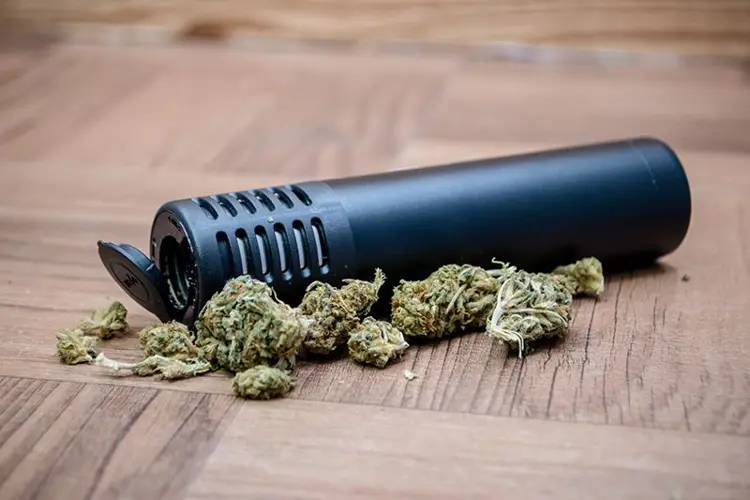
Since portable dry herb vaporizers are designed for convenience, they’re relatively simple to use.
- Read the guide or manual: This goes for any new vaping device, but make sure to read the manual. If it’s not on hand, you can usually find information on the manufacturer’s website. The guide will let you know about any special care, charging, or loading instructions. Although most portable vaporizers are similar, no two models are constructed exactly the same.
- Charge the device: Portable vaporizers are all rechargeable, but there are two kinds of batteries: removable or built-in. Built-in batteries are more straightforward to charge via USB. However, if your battery stops charging or breaks, you may need to replace the entire device. Removable batteries need to be taken out of the device and placed into a charger. There’s an extra step, but it’s simple to replace a broken battery.
- Grind your dry herb: You can use anything from marijuana bud to CBD-dominant hemp. Use a grinder to prepare your herb. Don’t grind with your hands, since it’ll be difficult to reach the right consistency. Although this varies between vaporizers, in most cases the bud should reach a medium-fine state before packing. If the flower isn’t ground finely enough, it may not cook all the way through.
- Pack your herb into the chamber: Before turning on your portable vaporizer, it’s time to load the chamber. Remove the lid and add your herb. Remember, vaporizer chambers don’t need to be filled to the brim. Overfilling can lead to inconsistent hits and uneven heat distribution.
- Power on and set the temperature: Turn on your portable cannabis vaporizer and adjust the temperature. Some devices will allow you to set a precise temperature, though others offer presets. If this is your first time using a vaporizer, start around 350° F (177° C) and adjust up, as desired.
- Take a hit: Once you’ve adjusted any necessary settings, you’re ready to draw. Hold down the button and inhale through the mouthpiece. Release the button after you’ve finished drawing. Pace yourself and start with smaller hits, up to two seconds.
How to clean a portable vaporizer
Any device with a refillable chamber needs to be cleaned regularly. You can clean most of your device’s components with isopropyl alcohol.
Over time, you’ll notice a sticky buildup forming inside the vaporizer’s airway. This is a byproduct of warm vapor coming into contact with cooler surfaces. The longer you go without cleaning your device, the more residue will build up—putting your device at a high risk of clogging. You’ll also notice a decrease in vapor quality.
Give your portable cannabis vaporizer a quick scrub after every session. Deep cleans are equally important, but you’ll only need to perform those after a few uses.
- Turn off and cool down: Allow your device some time to cool completely before cleaning. Don’t wait too long after cooling, however; residue is easier to scrub off when it’s still warm and soft.
- Empty the already vaped bud (AVB): Remove any AVB from your vaporizer’s chamber. If you choose, this can be saved and used to make edibles or concentrates.
- Scrub the oven and mouthpiece: Use a small, firm cleaning brush to scrub the chamber’s interior, as well as the mouthpiece. If you can’t fit your brush inside the mouthpiece, use a toothpick or paperclip.
You can stop after this step for quick post-session cleanings. If you want to deep clean your vaporizer, here are the next steps to follow:
- Dip a cotton swab in isopropyl alcohol: Dampen the swab with alcohol and use it to clean your mouthpiece, chamber, and other components. Gently wipe down the interior and remove any leftover residue.
- Deep clean the mouthpiece: If your device has a removable glass, ceramic, or steel mouthpiece, soak it in isopropyl alcohol before rinsing with warm water. Don’t soak rubber or plastic mouthpieces; instead, clean them with soapy water, a cloth, and a pipe cleaner.
- Soak the filter: Remove the filter, if any, and soak it in isopropyl alcohol for a few minutes. You can also clean it with an alcohol wipe.
- Reassemble your vaporizer: After all the components have dried, reassemble your portable vaporizer. Before using your device, let it run on high heat for a minute or two. This helps remove any leftover alcohol residue.
Portable vaporizers FAQ
What is the best temperature to use a portable vaporizer at?
Temperature control is one of the biggest advantages of vaporizers over smoking. It’s easier to customize most aspects of your experience, including flavor, potency, and vapor output.
325-350°F (163-177°C)
- Effects: Mild high; reduced coughing and side effects.
- Who should vape at this temperature? Wake-and-bakers; flavor and aroma seekers.
350-400°F (177-204°C)
- Effects: Moderate high.
- Who should vape at this temperature? Everyday vapers; people looking for moderate flavor and effects.
400-430°F (204-221°C)
- Effects: Intense high; increased risk of coughing and side effects.
- Who should vape at this temperature? Experienced vapers; best for nighttime sessions.
Delta 9 THC has a boiling point of 315°F (157°C). In order to feel the effects of marijuana, your portable vaporizer should be set to 325°F (163°C) or above. Other cannabinoids have higher boiling points. For instance, CBD-dominant hemp bud should be vaporized at slightly higher temperatures.
Vaping at lower temperatures—325-350°F (163-177°C)—has its benefits. You can expect the cleanest, most authentic flavor. This temperature range is ideal if you’re looking to keep terpenes intact. Give it a try if you aren’t seeking potency; the psychoactive effects of THC will be milder at low temperatures. Low temp hits are smoother and the least likely to cause coughing or side effects.
For most weed vapers, 350-400°F (177-204°C) is the optimal range. This is the middle ground between lower and higher temperatures; you can enjoy the potency of THC, sans overbearing effects. You’re also less likely to encounter negative side effects (such as paranoia) than if you set your pocket vaporizer to a high temperature. Some terpenes will be overcooked, so there will be a slight loss in flavor.
If a quick, powerful high is your top priority, set your dry herb vaporizer to 400-430°F (204-221°C). This range isn’t for beginners; expect a very potent hit of THC. Terpenes will be vaporized quickly, so you’ll notice a big decline in flavor at this point.
Where can I buy a portable vaporizer?
You can find portable vaporizers from a number of popular vaping brands.
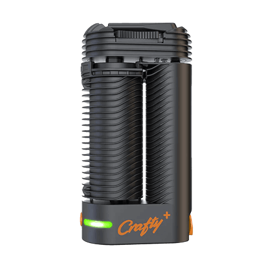
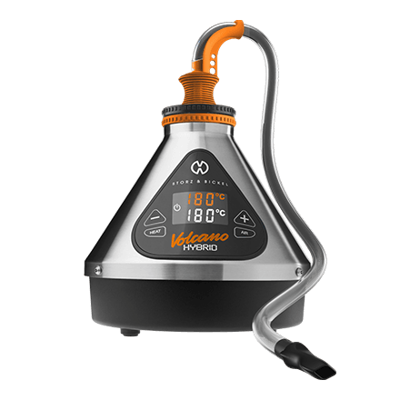
One of the most prolific is Storz & Bickel, creators of the Mighty+ and Crafty+. Those familiar with desktop vaporizers have probably heard of the Volcano Hybrid and Volcano Classic, which are produced by the same manufacturer. All of these devices can be purchased through online shops. Alternatively, sometimes you can buy portable vaporizers directly through a brand’s website.
If you’re familiar with portable vaporizers and know what you want, buying online is a good method. Go this route if you’re comfortable researching independently and know the specs you’re seeking.
Purchase a dry herb vaporizer in person if you don’t know where to start. Begin by researching smoke and vape shops in your area to see which ones have vaporizers in stock.
You can call or head over to the shop and speak to an associate. That way, a knowledgeable party can guide you through the process. They’ll ask questions about your vaping needs and priorities to determine the best device for you.
How much do portable vaporizers cost?
Like their desktop counterparts, there’s a significant range in the cost of portable vaporizers.
At their absolute cheapest, you can find select models between $50 and $100. These will usually offer fewer features and customization opportunities.
The bulk of portable vaporizers fall into the $100 to $300 range. This includes the Pax 3, which sits at the lower end. If you’re looking to invest but don’t want to splurge on a high-end device, it isn’t hard to find products.
Some luxury dry herb vaporizers will cost over $300, including the Mighty+ by Storz & Bickel. Expensive models are more likely to include features like precise temperature control and convection heating.
What is the best portable vaporizer under $100?
It can be a challenge to find a good portable vaporizer under $100. Even the more affordable models sit between $100 to $150, more often than not.
Fortunately, we found a high-quality portable vaporizer for less than $100: the POTV One, which comes in at just $99.95.
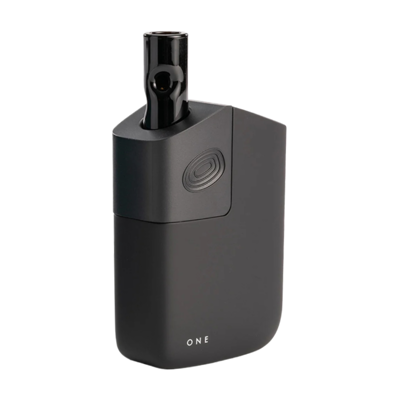
The POTV One isn’t as customizable as pricier options, but it creates rich vapor with a lightweight, pocket-sized body. It’s simple to learn and a fantastic product for beginners.
Is the GEEK BAR PULSE 2 better than the original? We test its battery, fast charging, flavors, performance, and more in our full review.

The TASTEFLEX CRESMO 80K is an innovative disposable vape, featuring E-VALVE technology, temp control, and three power levels. Read our review to learn more.
The sixth generation of XROS pod vapes has arrived! Our VAPORESSO XROS 6 and XROS 6 MINI review covers performance, flavor, battery life, and overall value.

The Lost Mary VIZ is a 55K-puff disposable with 50 mg nic salt, USB-C charging, 360° LED lighting, visible e-liquid, and a satisfying MTL draw.
Learn whether caffeine pouches are safe, including potential side effects, caffeine limits, oral health risks, and who should avoid them.

Because of declining cigarette sales, state governments in the U.S. and countries around the world are looking to vapor products as a new source of tax revenue.

A list of vaping product flavor bans and online sales bans in the United States, and sales and possession bans in other countries.

A closer look at PouchPoint, an online nicotine pouch store offering competitive pricing, wide selection, and a smooth shopping experience.
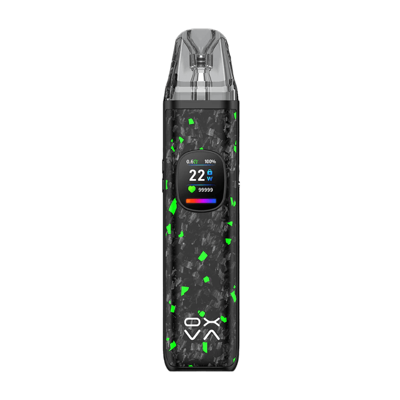

Find Your Perfect Product
Navigate our vape database precisely by customizing your filters. Find products tailored to your needs with options like price, category, and more.
Sort by:




Rely on Our Expertise
At Vaping360, we take pride in our deep expertise and years of experience in the vaping industry. Our dedicated team of professionals is committed to leveraging their extensive knowledge to meet your needs and exceed your expectations.