Hemp manufacturers are in a race to find new cannabinoids. No matter how trace or obscure, it feels like any cannabis product can be marketed as the latest and greatest.
Tetrahydrocannabiorcol (THCC) could be a rare exception. It hasn’t gone unnoticed by the hemp industry, but no company has so far formulated a product containing it. Here’s what we know about THCC, including its structure, potential benefits, and similarities to THC.
What is THCC?
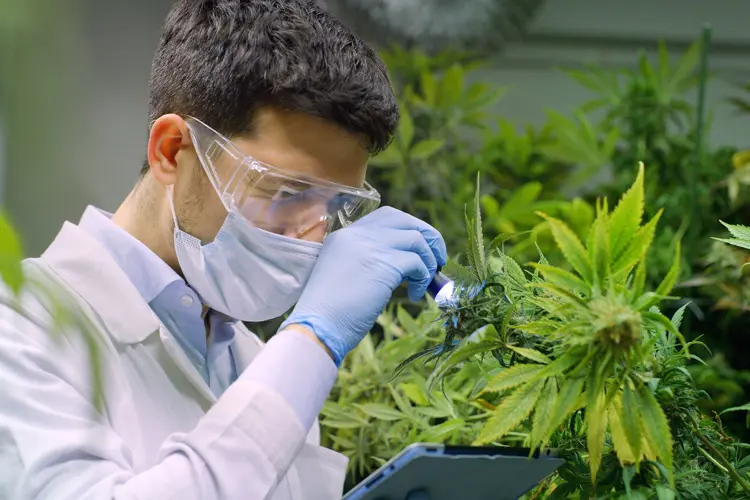
THCC is a non-psychoactive cannabinoid found in the pollen of male cannabis plants, firmly separating it from the commercial alternatives. Active cannabinoids—including popular hemp-based compounds like delta 8 THC and CBD—are most abundant in the resin found in the flowers and leaves of female plants.
Researchers first identified THCC in the 1970s as a constituent of Brazilian cannabis. They detected very trace amounts of the cannabinoid, and as a result, assumed it contributed little to the plant’s biological activity.
The THCC cannabinoid is a homolog of both THC and THCV. Although structurally similar, it has a unique chemical formula (C17H22O2) and interacts differently with the human endocannabinoid system. It isn’t psychoactive, but THCC shows strong promise in medicine.
Does THCC get you high?
Consuming THCC won’t get you high. That much was clear from the beginning.
Carbon tail length allows us to estimate a substance’s binding affinity with human cannabinoid receptors. Generally, the longer the chain, the better it’s able to grip. A high affinity for CB1 is necessary to produce strong psychoactive effects.
THCC doesn’t bind to CB1 or CB2 receptors in the endocannabinoid system. Rather than the sprawling carbon tail we see in THC and its variants, THCC has a methyl group.
What are the effects of THCC?
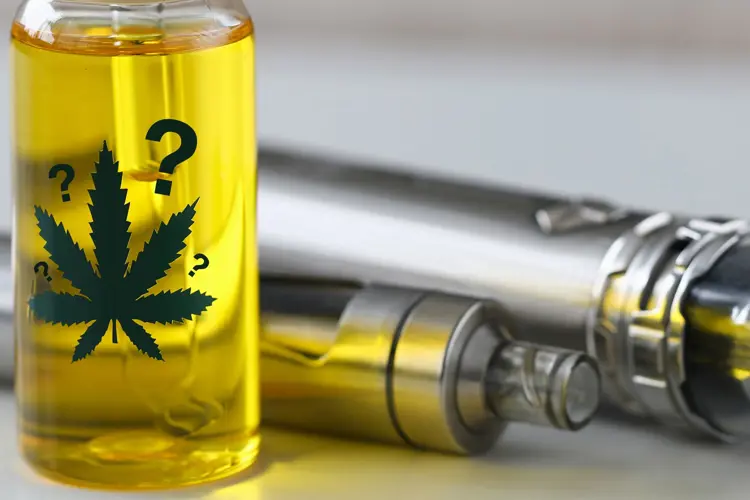
It’s unclear how valuable THCC could be to recreational consumers, but medical researchers have taken an interest in it.
Despite its low affinity for CB1 and CB2 receptors, THCC directly activates an ion channel known as TRPA1. This channel is located on a cell’s plasma membrane and acts as a sensor for pain and cold temperatures. It can also signal exposure to environmental toxins and irritants.
TRPA1 guides certain protective responses, including airway resistance and cough. Activation of this channel by THCC may prove to combat neurogenic inflammation and support processing of painful stimuli. THCC—and similar TRPA1-activating substances—could play a powerful role in future analgesic and anti-inflammatory therapies.
We have limited studies exploring the connection between THCC and TRPA1 specifically, and more trials are needed to confirm its potential as a painkiller.
A related temperature-sensing channel, TRPV2, also seems receptive to THCC.
TRPV2 helps modulate a handful of body systems: immune cell and cardiac function, immunity, and neuronal development. It’s less clear how this link can be applied to future therapies, as TRPV2’s pharmacology isn’t well understood.
THCC vs THC
As homologs, THC and THCC fit into the same chemical series. Similarities in structure take priority over their distinct effects and practical uses.
THCC’s primary structural difference from THC is its carbon tail’s conversion into a methyl group. It also has a significantly lower molecular weight. THC’s five-carbon alkyl chain is chopped almost clean off in THCC, reduced to a single atom.
Without any binding affinity for CB1 and CB2 receptors, THCC appears to have no psychoactive properties whatsoever. For perspective, its tail contains even fewer carbons than nonintoxicating CBD.
Thanks to a generous carbon tail, delta 9 THC binds easily to cannabinoid receptors. Consuming THC-rich cannabis products will induce a strong sense of euphoria, with effects lasting up to several hours.
Will THCC show up on a drug test?
It’s unknown whether THCC would show up on a drug test. As a general rule, stay away from any kind of cannabis product before a drug screening.
Nonintoxicating cannabinoids rarely trigger a positive on their own. However, any hemp product may contain trace amounts of delta 9 THC, or even larger quantities of its psychoactive isomers, such as delta 8 THC. Both variants produce the metabolite drug tests are seeking out.
Is THCC legal and where is it sold?
Although hemp-derived THCC would be legal in theory, it doesn’t appear that any THCC products have reached the market. Even if it did, third-party laboratories don’t test for THCC. It won’t show up on a certificate of analysis (COA), meaning there’d be no way for consumers to verify authenticity.
It’s still possible that manufacturers will push out THCC products in the future. If you come across any, stay skeptical.
Currently, the only commercially available form of THCC is a solution sold to labs. This product isn’t intended for human consumption, nor is it available for purchase by recreational users. Researchers are the only ones with access to THCC.
Thanks to a generous carbon tail, delta 9 THC binds easily to endocannabinoid receptors. Consuming THC-rich cannabis products will induce a strong sense of euphoria, with effects lasting up to several hours.

China destroyed more than 55,000 vapes and 188 million smuggled cigarettes as a wider crackdown seized $355 million in illicit tobacco.

Eight EU governments want a ban on new nicotine products, broad flavor restrictions, and tighter rules for vapes and nicotine pouches.

UK expands age-18 rules to nicotine-free vapes and nicotine pouches on Oct. 29, banning vending machines, promotional giveaways, and major discounts.

UK smoking falls to a record-low 9.8% in 2025, while 5.4 million adults vape in Great Britain, according to new government statistics.
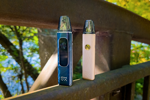
Check out our OXVA XLIM 4 and XLIM PRO 4 review to learn about the new UNITECH 3.0 pods and the incredibly innovative anti-burn tech (ABT).
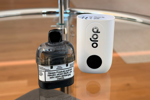
The DOJO BLAST X combines a 10 mL refill system, a dual-mesh coil, and a 1000 mAh battery. Is it needlessly confusing? Read our review to find out.
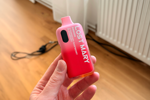
The Lost Mary BM6000 is a pre-filled pod vape that pairs a 2 mL pod with a 10 mL refill container and a QUAQ mesh coil. Read our review to learn more.
The DOJO PUREX 60K is a disposable vape with a 1000 mAh battery, 16 mL INSTA-JUICED tank, and two power modes. Read our review to learn more.