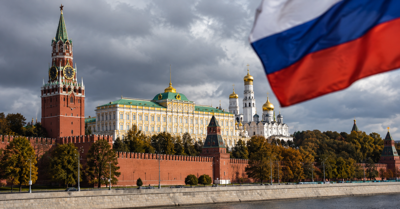
Russian President Vladimir Putin has placed four Japan Tobacco International (JTI) businesses under temporary Russian management, stripping the tobacco giant of control over key operations in one of its biggest markets.
The Nov. 5 order makes JTI the first major international tobacco company subjected to Russia's temporary asset-management mechanism, according to Interfax. It gives a Russian-appointed manager authority over the businesses, but does not formally transfer ownership.
Presidential Decree No. 817 names a Russian joint-stock company called Promyshlennye Aktivy, or Industrial Assets, as temporary manager. The affected companies are Petro in St. Petersburg, JTI Donskoy Tabak in Rostov-on-Don, JTI Yelets in the Lipetsk region, and Kres Neva in the Leningrad region. The first two manufacture tobacco products; the others process tobacco materials. Together, the designated shareholdings cover all ownership interests in the four companies.
The decree invokes a temporary management system introduced in 2023 for designated foreign-linked assets. The manager may exercise ownership rights but cannot sell the assets. The order gives no reason for targeting JTI. Interfax also reported that the decree does not identify the appointed company beyond its name, leaving uncertainty about precisely who will exercise control.
Japan Tobacco has plenty at stake. According to its Oct. 29 earnings report, the company sold 59.9 billion tobacco units in Russia during the first nine months of 2026, down 3.6 percent year over year. Its average share of the Russian tobacco market was 35.8 percent by volume. The group sells cigarette brands including Winston, Camel, and LD, and has continued to develop its Ploom heated tobacco business internationally.
JTI suspended new investments and marketing in Russia following the country's 2022 invasion of Ukraine, but continued operating there. A company representative told Interfax on Nov. 5 that JTI was studying the decree and weighing possible responses, with employees and business partners as its immediate priority. In a Nov. 6 statement, Japan Tobacco formally confirmed that four of its Russian manufacturing subsidiaries had been placed under temporary management. The company said it was assessing the decree's details, its potential impact on the group, and possible responses.
Other international tobacco companies made different decisions after the invasion. British American Tobacco completed the sale of its Russian and Belarusian businesses in September 2023. Imperial Brands transferred its Russian operations to local investors in 2022. Philip Morris International, meanwhile, has remained in the country despite previously discussing an exit.
In its latest U.S. Securities and Exchange Commission filing, Philip Morris reported approximately $5.6 billion in Russian assets as of Sept. 30, 2026. Russia represented about seven percent of its net revenue during the first nine months. PMI warned that regulatory restrictions could make a sale difficult and substantially reduce the value it could recover. JTI's experience now shows a separate risk: a foreign company can retain legal ownership of major Russian operations while losing the power to manage them.


CBG (cannabigerol) is the mother of all cannabinoids, including CBD and THC. Learn more about CBG flower, its effects, strains, and whether it can get you high.

Learn how old you have to be to buy caffeine pouches, including federal and state age restrictions, retailer policies, and rules for minors.
Learn whether caffeine pouches are safe, including potential side effects, caffeine limits, oral health risks, and who should avoid them.

Because of declining cigarette sales, state governments in the U.S. and countries around the world are looking to vapor products as a new source of tax revenue.