Why test for nicotine at all?
People are usually interested in how long nicotine remains in the system because their employer wants to test for nicotine—either as a condition of employment, or more commonly to determine the cost of health insurance.
As unfair as it seems, employers and insurance companies don’t have to distinguish between cigarette smokers and users of nicotine in safer forms, like vaping or smokeless tobacco. Even the use of nicotine gum—which the FDA approves for long-term use—can be treated as a health risk by employers, and lead to higher insurance prices for employees.
Insurance companies consider the presence of nicotine a reliable indicator that the test subject is a tobacco user or a user of nicotine replacement therapy (NRT) products, which usually means an ex-smoker (and someone likely to return to smoking, as more than 90 percent of NRT users do).
But if you try to find the answers to questions like, “How long does nicotine stay in your blood?” or “How long does nicotine stay in your urine?” beware that most testing doesn’t even look for nicotine per se. More on that shortly.
How long does nicotine stay in your body?
While there are tests to measure nicotine in the human body, it’s hard to detect in the blood after one to three days, or in the urine after four days. That’s why most employers and insurance companies no longer concern themselves with how long nicotine stays in your body.
Instead, they test for a substance called cotinine, which is a metabolite of nicotine. Nicotine is turned into cotinine (metabolized) by the liver, and remains detectable in the body for up to three weeks (though usually about one week).
The length of time cotinine remains in your system can vary depending on your ethnic background, gender, medications consumed, and even your diet. For example, men usually maintain higher cotinine levels than women. As the science has advanced, advice on the “cut-points” (the levels above which the person being tested is considered positive for nicotine use) has changed.
Different nicotine tests
Blood testing
There are several tests that can be used to measure cotinine levels. Blood testing is very accurate and can detect both nicotine and cotinine. It’s also the most expensive and invasive testing method, so it’s less frequently used than the other methods.
Obviously, drawing blood requires a trained technician and a visit to a lab, which makes the process expensive and cumbersome for both employee and employer. There are two kinds of blood tests for cotinine. One is a simple positive-or-negative measure that doesn’t quantify the amount of cotinine present in the blood. The other test can specify the level of the nicotine metabolite in the blood serum.
Saliva testing
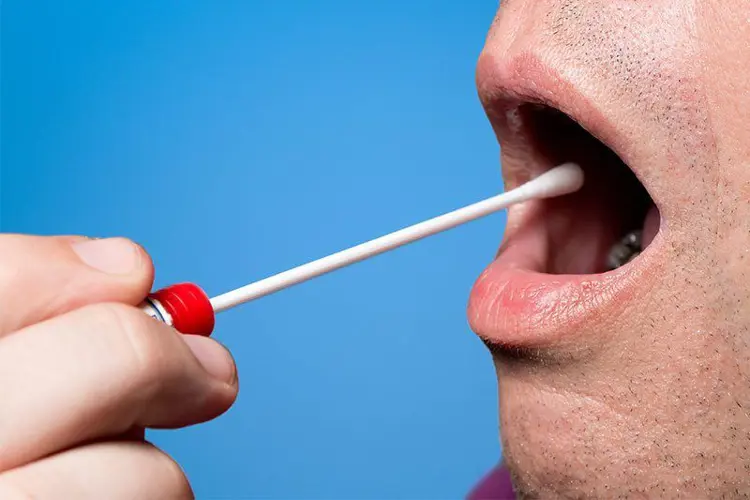
Saliva testing is the most sensitive of the common testing methods, and many labs and insurance companies have switched to saliva testing in recent years. The levels of cotinine that saliva tests are able to detect are about one-third as high as those in blood serum, and about one-fifteenth those in urine. But the biggest benefit of saliva testing is its ease for all concerned.
Saliva testing for cotinine is often done by employers using kits supplied by third-party labs. Usually a swab of the person’s mouth is done, and the swab is inserted into a self-sealing container that is then shipped to the lab. The results are then returned to the employer or insurance company online or by phone. This is far less expensive and time-consuming than sending each employee to a lab for blood testing.
Urine testing
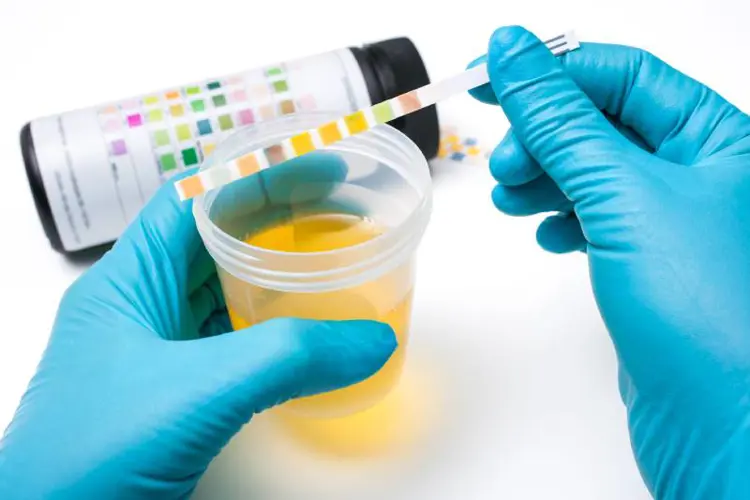
Urine contains higher levels of cotinine than blood or saliva—as much as six times higher. This makes it a better choice for detecting low concentrations of cotinine. The test is relatively simple too. A test strip is soaked in the urine sample for a few minutes, and it quickly delivers a positive or negative result.
Hair testing
Cotinine testing from hair samples is the most reliable method, but also the most difficult, most expensive and slowest. Hair testing is sometimes ordered if the results of other tests are unclear or in doubt. It’s also frequently used in scientific studies. The benefit for scientists studying smoking and nicotine is that hair samples can retain cotinine for as long as three months.
How can I avoid testing positive?
There are a variety of products that claim to “cleanse the body” of nicotine (and other drugs) in just a few days. Whether they're truly effective is questionable. Many people being tested—except heavy smokers—have a good chance of testing negative after a week or so without nicotine, and the vast majority will test negative after two weeks.
So save your money, buy some nicotine-free e-liquid, and drink a lot of water to flush your system.
Do all insurance companies test for nicotine?
Insurance companies commonly conduct nicotine (or cotinine) tests on health insurance customers, but some also test for life insurance purposes. Some companies are changing their guidelines now and allowing policy holders to vape or use smokeless tobacco and still be eligible for non-smoker rates. Some even allow cigar smoking without raising their rates.
If you’re in the market for life insurance, it may pay to shop around and ask questions about their policy toward reduced-risk nicotine use.
In the future, we hope employers and insurance companies will recognize the difference in risk between smoking and safer forms of nicotine use, and stop punishing vapers and snus users. Meanwhile, your best bet if you know when you’re going to be tested is to simply abstain for two weeks or longer. If you’re in a secure job, consider discussing with your employer why they should be encouraging smokers at your company to switch to low-risk nicotine products like vaping.

China destroyed more than 55,000 vapes and 188 million smuggled cigarettes as a wider crackdown seized $355 million in illicit tobacco.

Eight EU governments want a ban on new nicotine products, broad flavor restrictions, and tighter rules for vapes and nicotine pouches.

UK expands age-18 rules to nicotine-free vapes and nicotine pouches on Oct. 29, banning vending machines, promotional giveaways, and major discounts.

UK smoking falls to a record-low 9.8% in 2025, while 5.4 million adults vape in Great Britain, according to new government statistics.
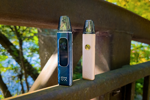
Check out our OXVA XLIM 4 and XLIM PRO 4 review to learn about the new UNITECH 3.0 pods and the incredibly innovative anti-burn tech (ABT).
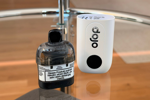
The DOJO BLAST X combines a 10 mL refill system, a dual-mesh coil, and a 1000 mAh battery. Is it needlessly confusing? Read our review to find out.
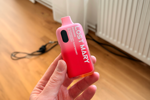
The Lost Mary BM6000 is a pre-filled pod vape that pairs a 2 mL pod with a 10 mL refill container and a QUAQ mesh coil. Read our review to learn more.
The DOJO PUREX 60K is a disposable vape with a 1000 mAh battery, 16 mL INSTA-JUICED tank, and two power modes. Read our review to learn more.